Miso, dashi, and umami
What stock and fermented soybean paste each bring to the bowl, and how to layer them in a Japanese soup.
Start with the stock
Dashi is a family of Japanese stocks. Kombu, a dried kelp, makes a clear, gently savory stock on its own. A common combination pairs kombu with katsuobushi, dried and shaved bonito. Dried shiitake can bring a deeper, earthier note to a plant-based stock.
Kombu contributes glutamate. Bonito contributes inosinate. Together, they can taste more savory than either ingredient alone. That savory taste is umami, and you can notice it before you add much salt.
Use miso as the seasoning
Miso is a fermented paste commonly made with soybeans, salt, and kōji. Pastes vary in salinity, sweetness, and aroma. A spoonful of one paste can season a pot quite differently from a spoonful of another.
For soup, dissolve a small amount of miso in a ladle of warm dashi, stir it into the pot off the heat, and taste before adding more. This disperses the paste without leaving clumps and preserves more of its aroma.
Taste the difference in two bowls
Try tasting plain dashi and then a second spoonful stirred with a little miso. The first gives you the flavor of the stock. In the second, notice how the paste adds salt, body, and the aroma of fermentation.
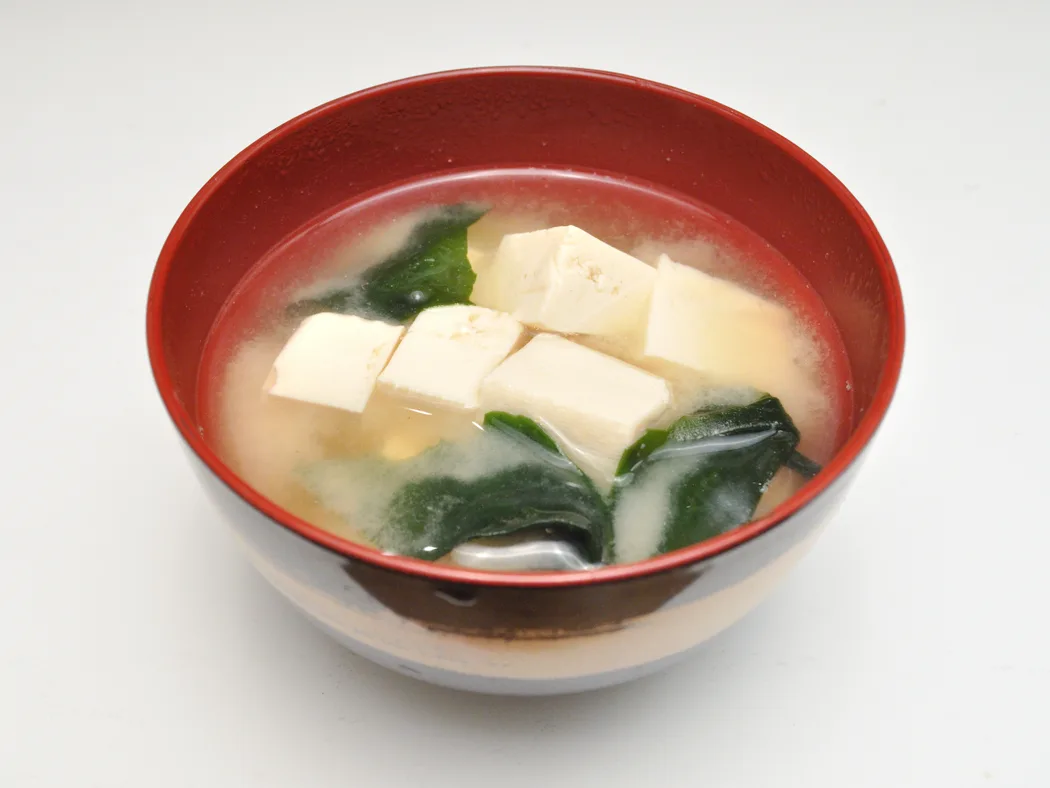
In tofu and wakame miso soup, the paste seasons the broth. In kitsune udon, the dashi is seasoned with soy sauce and mirin, and the sweet-soy tofu brings another layer of flavor.